



Development of a Smart Home App
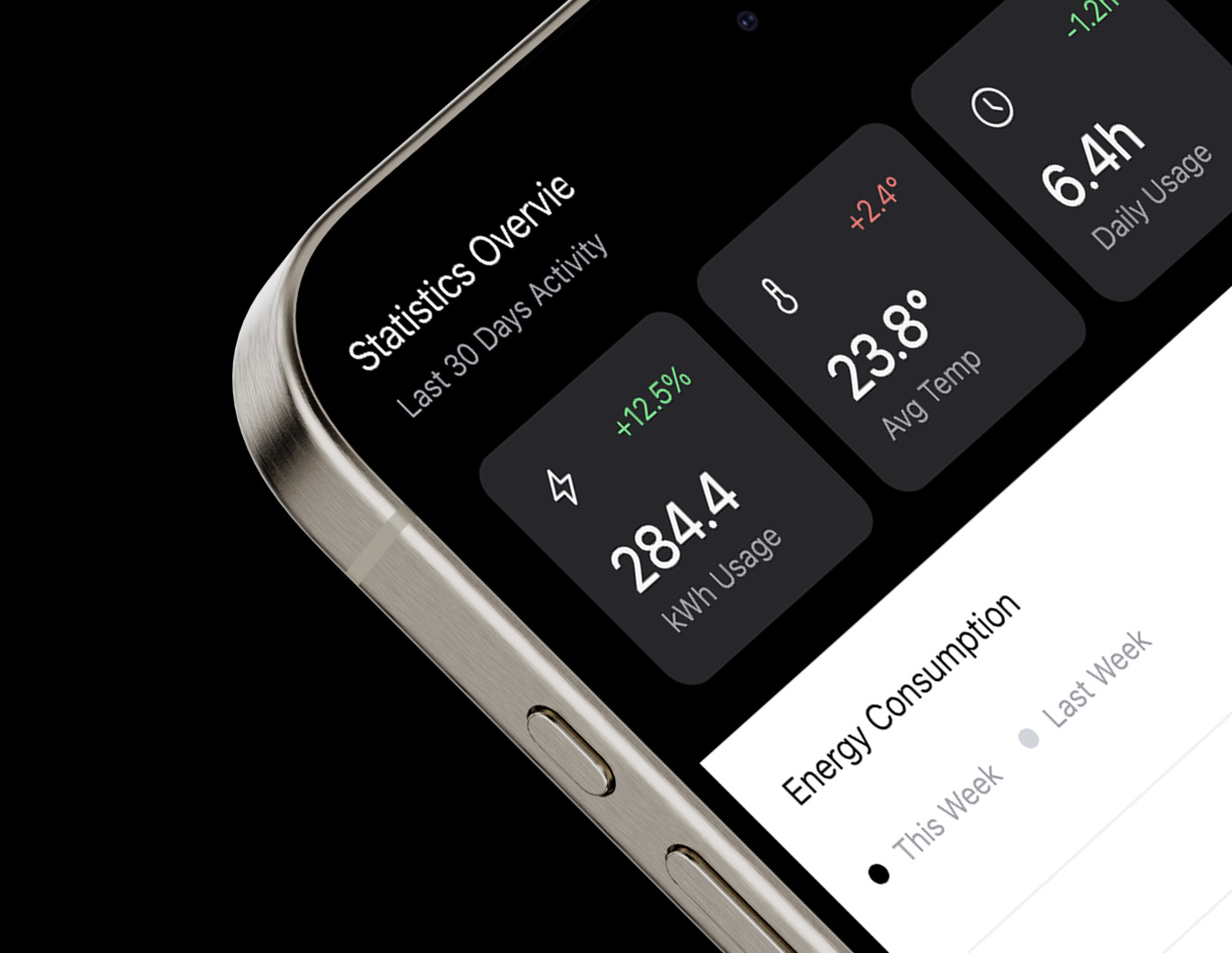
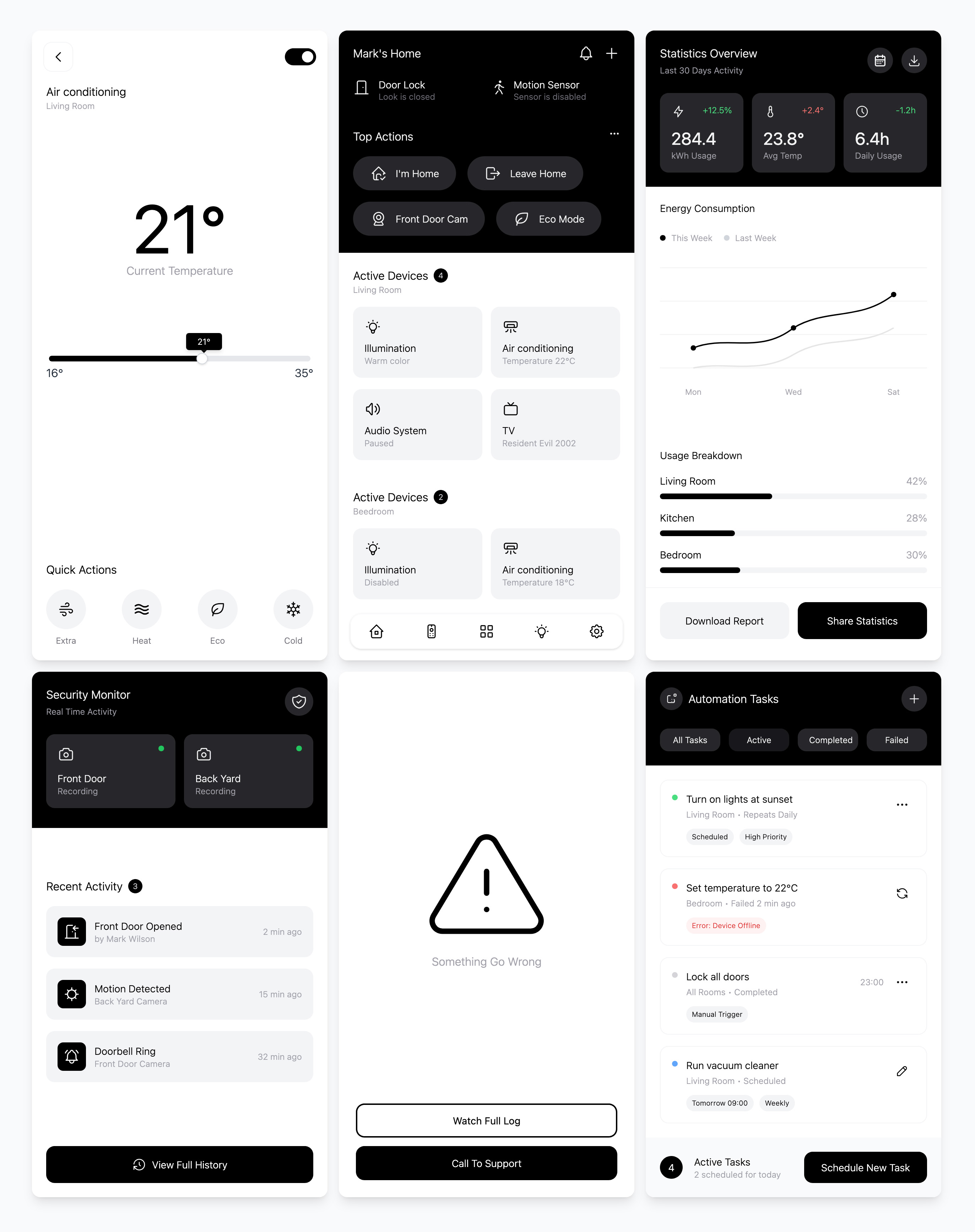
For a smart home solutions provider, we developed a mobile application that brings multiple IoT devices into one central interface and makes everyday home control significantly easier.
The project addressed a common challenge in connected homes: lighting, climate control, security systems, and sensors often operate through separate applications. This creates a fragmented experience, especially in households where several people with different levels of technical confidence use the same devices.
Our goal was to create one accessible platform that combines device management, energy efficiency, automation, and simple day-to-day control.
The Challenge
The existing smart home setup required users to manage different systems separately. Lighting, temperature, security, and other devices each followed their own logic, which made routine actions slower and reduced the practical value of automation.
Energy usage also lacked a clear overview. Users needed real-time data, understandable consumption patterns, and helpful recommendations that could support better decisions without affecting comfort.
Accessibility played an equally important role. The application had to feel intuitive for technically experienced users, families, children, and older household members.
The Solution
We developed a cross-platform smart home application with React Native for iOS and Android. At its centre is a unified dashboard where users can control lighting, climate systems, security devices, and connected sensors.
The application supports personalised scenarios such as “Morning”, “Evening at Home”, and “Away”. Each scenario can trigger several actions at once, including adjusting the lighting, changing the temperature, activating security settings, or switching off devices that are no longer required.
To support more efficient energy use, we integrated real-time consumption data, visual reports, and intelligent recommendations. The system can identify recurring usage patterns and suggest practical adjustments that help reduce consumption while preserving everyday comfort.
Multi-user access was another core part of the product. We created profiles with different permission levels, including full control for administrators, selected functions for family members, and a simplified interface for children. QR-code setup, guided onboarding, and clear instructions make it easier to connect devices and invite new users.
The UX design follows the same calm and practical approach. The interface uses direct controls, clear status indicators, intuitive sliders for brightness and temperature, and timely push notifications for important device activity.
Technical Implementation
The mobile application was built with React Native to provide a consistent experience across iOS and Android. Node.js and MQTT manage communication with connected IoT devices, while Firebase supports analytics, push notifications, and user interaction tracking.
We also prepared the application for presentation in the App Store and Google Play. Product copy, screenshots, and demo content were structured around relevant search terms, including “Smart Home Automation”, “Energy Saving App”, and “IoT Device Control”.
The Result
The result is a smart home application that brings connected devices into one accessible platform and gives users a clearer, more comfortable way to manage their home.
According to the project evaluation, the application achieved a user satisfaction score of 94%, reduced average energy consumption by 32%, and attracted more than 18,000 active users. The simple setup process, clear permission system, and understandable automation scenarios contributed strongly to regular day-to-day use.
The platform is also ready for continued development. New device categories, additional automation scenarios, and integrations with voice assistants can be added gradually within the existing architecture.
